Oishi Honda
The Wind-Up Bird ChronicleOishi Honda, usually called Corporal Honda in Lieutenant Mamiya’s recollections, is a reserved soldier whose value becomes clear through action rather than self-display. On a dangerous assignment near the Khalkha River, his judgment and resourcefulness preserve a classified document and help save Mamiya; long afterward, a letter reporting Honda’s death and an empty Cutty Sark box make his absence another of the novel’s quiet, unresolved presences.
Identity and Background
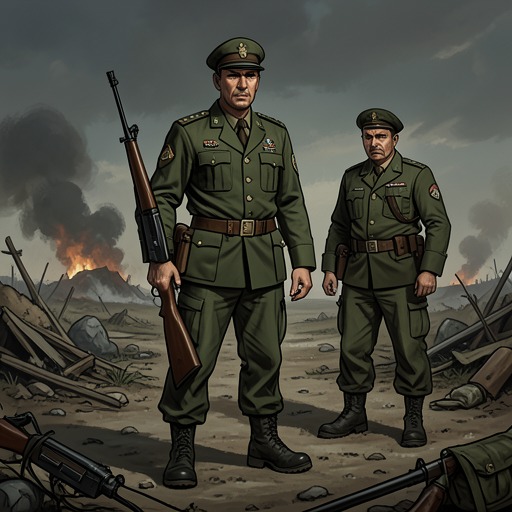
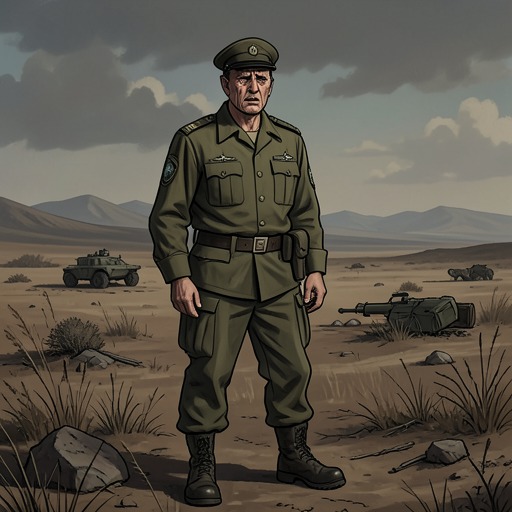
Honda has recently arrived from Japan when he is assigned to accompany Yamamoto and Mamiya on a small border mission. He has no battlefield experience, and Mamiya initially cannot understand why the general staff arranged for a soldier from the Seventh Division to join them specifically. The reason emerges in the field: Honda’s worth lies not in combat experience but in steadiness, perception, and the ability to do what a difficult situation requires.
Mamiya learns that Honda came from Asahikawa, where his father operated a small print shop. The youngest of three brothers, Honda had left middle school to work with his brothers for their father; his eldest brother had been killed in China. Honda loved reading, particularly books on Buddhist subjects, and used spare moments to read. His quietness is not presented as gloom or hostility: Mamiya remembers a serene man whose presence softened the people around him.
The Border Mission and Honda’s Abilities
Mamiya’s assignment combines escort duty with surveying the western border of Manchukuo near the Khalkha River. The region’s maps were crude, while political tensions with the Soviet Union and Outer Mongolia made a definitive border map potentially provocative. Yet the possibility of conflict meant the army needed practical military maps, detailed enough to guide camps, artillery, infantry movement, water supplies, and horse feed. The mission therefore takes place where incomplete knowledge of the land and the risk of international conflict meet.
Honda has only a year of training, but proves to be one of the unusually dependable soldiers who understand instructions quickly, endure without complaint, and carry out their duties precisely. His cavalry training makes him the party’s most knowledgeable horseman, and he takes care of its six horses with a sensitivity that seems to Mamiya almost intuitive. Sergeant Hamano recognizes his competence and readily entrusts him with responsibilities. In a mission where maps cannot reliably be matched to landmarks and the terrain offers little certainty, Honda’s practical attentiveness contrasts with the limits of formal planning.
Judgment, Rescue, and the Document
At a critical moment, Honda tells Mamiya that he believes Mamiya will outlive the others and die in Japan. He cannot explain how he knows; the statement is presented as an intuition, not a reasoned prediction. Mamiya’s later account gives the remark the weight of foreknowledge, while leaving its source unexplained.
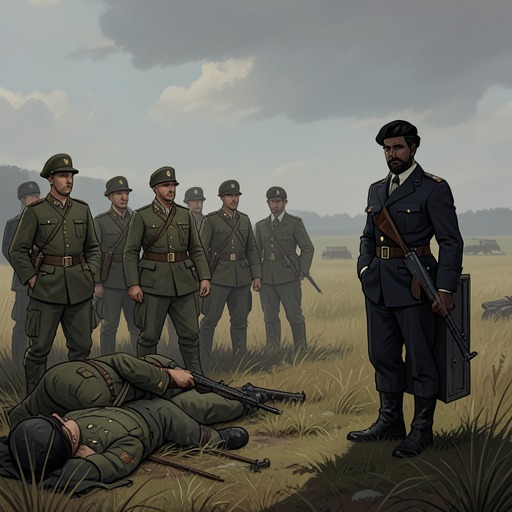
When Honda senses that Mongolian troops are coming, he slips away from the tent and remains hidden rather than trying to alert the others to escape together. He judges that the party has no realistic chance against an enemy who knows the territory and outnumbers and outguns them. The mission’s overriding priority is to prevent the document from falling into enemy hands, even at terrible personal cost. Honda takes it from Yamamoto’s bag and escapes alone; although this could look like desertion in ordinary combat, Mamiya stresses that resourcefulness is essential to their special assignment.
Honda witnesses what happens to Yamamoto and sees Mamiya taken away, but, without a horse, cannot follow immediately. He retrieves supplies the party had buried in the desert, hides the document there, and then sets out on foot after Mamiya. Finding the well where Mamiya is held requires a major effort: Honda does not know which direction the captors went. On the third morning he reaches and rescues Mamiya. His action protects both the document and the life of the surviving officer, but it does not undo the losses that preceded the rescue.
Death and the Keepsake
Years later, Toru Okada receives a registered letter from Tokutaro Mamiya, who writes from Hiroshima Prefecture. Mamiya reports that Honda has died of a heart attack at home in Meguro, two weeks earlier. Honda lived alone and was found by his maid in the morning, slumped over the low table of his foot warmer. The doctors believed he had died quickly and without much suffering. The news arrives in an old-fashioned envelope addressed in brush writing, and Mamiya’s formal letter explains that, with no surviving relatives and following Honda’s wishes, he has taken responsibility for distributing the dead man’s keepsakes.
Honda’s will is described as exceptionally detailed and meticulous. It specifically names Toru Okada as someone Honda would be pleased to have receive a remembrance. The gift arrives as a carefully wrapped Cutty Sark box, but it is too light to contain a bottle. Okada removes layer after layer of wrapping and finds the box entirely empty. The object offers no explanation of what Honda intended to convey. Its emptiness makes the keepsake less a conventional inheritance than a material remainder that leaves the recipient—and the reader—with a question the narrative does not settle.
Narrative Significance
Honda’s importance rests on a striking gap between outward modesty and consequential action. He speaks little about himself, yet reads a perilous situation accurately, protects the document, and makes the difficult journey that saves Mamiya. The mission’s history also places his conduct against the machinery of war: uncertain borders, intelligence work, and the practical necessities of mapping matter, but survival depends on an individual’s judgment when plans fail.
His death and the empty box extend that pattern of withheld explanation into the later narrative. Mamiya can report Honda’s habits, service, final wishes, and fate, but the keepsake yields no decipherable message. Honda remains present through another person’s account and through a deliberately inscrutable object; the distance between what he did and what can finally be known about him is part of his quiet force in the story.